
-
Material Guide: Chloroprene (Neoprene®) Rubber cr rubber
Created in 1930 by DuPont, Neoprene® (CR) was initially introduced as an air and oil-resistant substitute for natural rubber. As a result of this, Neoprene® was the very first mass-produced synthetic rubber on the market. CR Polychloroprene (Neoprene®) is a great general purpose rubber material option that can be manufactured in a range of different ways to suit an array of environments and applications.Read more -
Polychloroprene - Different Types of Chloroprene Rubber ( CR )
General-purpose grades are mostly produced with n-dodecyl mercaptan as the chain transfer agent and occasionally with xanthogen disulfides. If xanthogen disulfides are used, the elastomers are more readily processible and give vulcanizates with improved mechanical properties.Read more -
Neoprene rubber polychloroprene / CR rubber quality
Polychloroprene rubber compounds are homopolymers of chloroprene (chlorobutadiene), and were among the earliest synthetic rubbers used to produce seals.Read more -
What Is CR Rubber? cr rubber
Chloroprene rubber, better known in the US as Neoprene (Dupont’s tradename) is produced by polymerization of the monomer 2-Cchloro–1,3-butadiene primarily in the configuration trans 1,4.Read more -
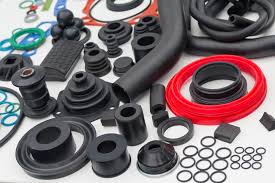
CR Rubber – Chloroprene Rubber – Neoprene
CR rubber is Chloroprene rubber, otherwise Neoprene is a polymer of chloroprene. It is one of the first synthetic rubbers. It is distinguished by above-average resistance to ozone. It is also resistant to weather conditions and many chemicals. He is also indifferent to flames.Read more
 Portuguese
  English
  Arabic
  Bengali
  French
  Indonesian
  Italian
  Russian
  Spanish
  Vietnamese